
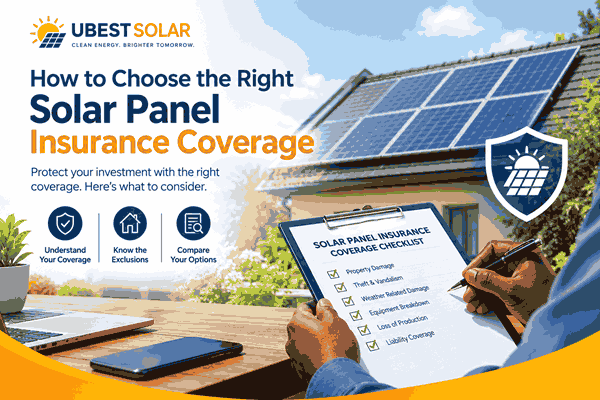
How to Choose the Right Solar Panel Insurance Coverage
Installing solar panels can help you enjoy more reliable electricity while reducing your dependence on the public power supply and fuel-powered generators. However, solar panels are only one part of the investment. Your complete system may also include an inverter, lithium batteries, mounting structures, cables and other electrical equipment.
If something happens to these components, replacing them can be expensive. This is why choosing the right solar panel insurance coverage is worth considering, especially if your home or business depends heavily on solar electricity.
But how do you know which insurance policy is right for you? Should you choose the cheapest premium, insure every component separately or look for a policy that covers several types of damage?
In this guide, we explain how to choose solar panel insurance coverage in Nigeria, what to compare before purchasing a policy, which exclusions to look out for and how to avoid paying for protection that does not meet your needs.
What Is Solar Panel Insurance Coverage?
Solar panel insurance coverage refers to the specific risks, equipment and financial losses an insurance policy agrees to protect you against.
The level of protection depends on the policy you purchase. Some policies may focus on physical damage to solar panels, while others may include inverters, batteries, theft protection or equipment transportation.
For example, in February 2026, Nairametrics reported a partnership between Casava and Rivy that introduced renewable energy insurance products for small and medium-sized businesses in Nigeria. The reported products included protection for solar panels and inverters against theft, vandalism and accidental damage, alongside logistics and delivery insurance.
You Might Also like: Deye 12kVA Three Phase Hybrid Inverter | Felicity 12KVA 48V Hybrid Solar Inverter, | itel IPV-12K48U 12KW 48V Hybrid Solar Inverter, and the Haisic 1.5KVA Hybrid Inverter with 4KWh Lithium Battery | All-in-One Solar System.
This shows that dedicated renewable energy insurance options are emerging in Nigeria. However, you should confirm the current availability, eligibility requirements and exact policy terms with the provider before applying.
The important thing to understand is that the name of an insurance policy does not tell you everything it covers. You need to read the policy wording and confirm what is included, what is excluded and how claims are settled.
1. Identify the Solar Equipment You Need to Protect
The first step is to make a list of the components you want your insurance policy to cover.
A typical solar power system may contain several valuable items, and the insurer may treat them differently.
Solar panels
Solar panels capture sunlight and convert it into electricity. Depending on the policy, you may want protection against specified physical damage, theft or other covered events.
If your panels are mounted on a roof, ask whether the policy covers damage to the panels, mounting structures and any associated property damage.
Solar inverter
The inverter converts electricity into a form suitable for powering your appliances. Since replacing an inverter can be costly, confirm whether it is covered under the same policy as your panels.
Do not assume that a policy described as solar panel insurance automatically includes the inverter.
Solar batteries
Batteries store electricity for use when solar generation is insufficient, such as at night or during cloudy weather.
Ask whether the policy includes your battery type and whether special conditions apply to lithium batteries. Also clarify whether damage caused by a manufacturing defect, internal failure or improper installation is excluded.
Mounting structures, cables and accessories
Solar installations also contain mounting frames, wiring, connectors, protection devices and other components. These items may affect the cost of restoring a damaged system.
Ask the insurer which accessories are included and whether the policy covers the cost of removing damaged equipment and reinstalling replacements.
Practical tip: Prepare an equipment list showing the model, quantity and replacement value of each major component. This will make it easier to compare quotations and avoid leaving important items uninsured.
Related:
1. How to Get Insurance for Solar Panels: A Step-by-Step Guide
2.How Much Does Solar Panel Insurance Cost?
2. Choose Coverage Based on the Risks You Face
Not every solar installation faces the same risks. A house in a residential neighbourhood may have different concerns from a shop, hotel, school or factory with a large solar installation.
Think about the events that could cause you the greatest financial loss, then check whether the policy addresses them.
| Risk | What to ask the insurer |
|---|---|
| Theft | Are panels, inverters and batteries covered if stolen? |
| Accidental damage | Which types of sudden physical damage qualify for a claim? |
| Fire | Does the policy cover fire damage to the solar equipment? |
| Storm or other weather events | Which weather-related events are covered, and what exclusions apply? |
| Vandalism | Is deliberate damage by another person included? |
| Transportation and delivery | Is equipment protected before it reaches the installation site? |
| Electrical or equipment breakdown | Is internal failure covered, or only damage caused by specified external events? |
| Business interruption | Is compensation for business losses available as an additional benefit? |
These are risks to investigate, not a list of benefits guaranteed by every insurance provider.
For example, a policy may cover theft but require evidence of forced entry or compliance with specified security measures. Another may cover accidental physical damage but exclude faults caused by poor installation or defective equipment.
Choose a policy based on your actual needs and the written terms rather than assuming that comprehensive-sounding wording means everything is covered.
3. Decide Whether You Need Basic or Broader Protection
The right level of insurance depends on your system’s value, your financial situation and how much risk you can reasonably afford to carry yourself.
Basic protection
A basic policy may suit someone seeking protection against a limited number of specified risks. Depending on the policy, it could be less expensive than broader cover.
However, a lower premium is not necessarily better if the policy excludes the risks you are most concerned about.
Broader protection
A broader policy may cover more types of accidental damage or include additional equipment and services. Some policies may offer optional extensions for transportation, liability or business interruption.
You should still examine the exclusions, limits and conditions. Broader cover does not mean every possible event is insured. | Haisic 1.5KVA Hybrid Inverter with 4KWh Lithium
Which should you choose?
Consider these examples:
- Homeowner: You may prioritise theft, fire and accidental physical damage to the panels, inverter and batteries.
- Small business owner: You may need equipment protection and may want to investigate whether business interruption cover is available.
- Solar equipment buyer: Transportation and delivery protection may be important before installation.
- Large commercial installation owner: You may need a specialist assessment covering the equipment, installation value and potential financial consequences of a major loss.
The best policy is one that provides useful protection for your particular circumstances at a cost you can afford.
4. Compare the Sum Insured With the Replacement Cost
One of the most important parts of choosing solar insurance is deciding how much your system should be insured for.
The sum insured is the amount stated in the policy for the insured property or loss, subject to the applicable limits and conditions. It is not automatically the amount you will receive for every claim.
Suppose your solar installation costs ₦4 million to replace today, but you insure it for only ₦2 million. If the system suffers a major covered loss, the lower insured amount could leave you with a substantial financial shortfall. The precise settlement depends on the policy wording, valuation method and any applicable underinsurance provisions.
When discussing the sum insured, ask:
- Is the system valued at its original purchase price or current replacement cost?
- Are installation and transportation costs included?
- Does the policy account for depreciation?
- Are there separate limits for batteries, inverters or individual items?
- What happens if the declared value is lower than the actual replacement cost?
Avoid guessing your system’s value. Use invoices, equipment specifications and current replacement quotations where possible.
You should also review the insured value after making significant upgrades or replacing components.
5. Understand the Excess or Deductible
An excess, sometimes called a deductible, is the amount you must bear yourself when an eligible claim occurs, according to the policy terms.
For example, imagine your insurer accepts a covered claim worth ₦1 million and the applicable excess is ₦100,000. If the excess is deducted in the usual way and no other limits or deductions apply, the insurer’s payment would be ₦900,000.
This is only an illustration. Actual settlements depend on the contract and circumstances of the loss.
When comparing policies, ask whether the excess is:
- A fixed amount.
- A percentage of the claim.
- A percentage of the insured value.
- Different for theft, fire or other types of damage.
A policy with a lower premium may have a higher excess. Consider whether you could comfortably pay that amount if something went wrong.
6. Check the Exclusions Carefully
Exclusions describe situations in which the insurer will not provide cover. They can make a significant difference to the usefulness of a policy.
Common issues to investigate include:
- Normal wear and tear.
- Manufacturing defects.
- Faulty installation or workmanship.
- Gradual deterioration.
- Damage caused by poor maintenance.
- Electrical or battery failures that are not covered events.
- Theft where required security conditions have not been met.
- Losses occurring outside the insured period.
- Business income losses that have not been specifically insured.
These are examples of potential exclusions or limitations. The actual exclusions vary by policy.
Pay special attention to exclusions affecting batteries and inverters, as these components can fail for reasons other than external damage.
For instance, a manufacturer’s warranty may address a qualifying product defect, while insurance may cover a different set of risks. Neither should be assumed to replace the other.
Ask the insurer to explain any unclear clause before you pay. If a representative promises that a particular event is covered, request confirmation in the policy documents or an authorised written endorsement.
7. Check Whether Your Existing Insurance Already Provides Protection
Before buying a separate policy, review any home, property, business or equipment insurance you already have.
Your existing policy may provide some protection for solar equipment, but you should never assume that this is automatic.
Ask your current insurer:
- Are the panels treated as part of the insured building or as separate equipment?
- Are the inverter and batteries included?
- Does cover apply if the panels are mounted on the roof?
- Are theft and accidental damage included?
- Does the current sum insured account for the solar installation?
- Are additional premiums or endorsements required?
If your current policy offers suitable protection, an extension may be an option. If it does not, you can compare dedicated solar insurance or other appropriate cover.
Make sure you understand how overlapping policies would respond to the same loss. Having two policies does not necessarily mean you can collect the full value of a loss from both.
8. Choose a Reputable and Authorised Insurance Provider
A policy is only useful if you understand who is providing it and how to make a claim.
In Nigeria, the National Insurance Commission (NAICOM) regulates insurance companies and publishes information about licensed insurers and brokers. You can use its official resources to check a provider’s regulatory status.
Before committing to a provider:
- Verify the insurer or intermediary through the appropriate official channel.
- Confirm the identity of the company underwriting the policy.
- Request the full policy wording and schedule.
- Ask how claims are submitted and what documents are required.
- Check the official contact details and payment channels.
- Keep copies of your quotation, policy and payment receipt.
If you are purchasing insurance through a solar installer, financing company or digital platform, ask which insurer actually underwrites the product and who is responsible for handling claims.
Do not rely on marketing promises alone. You need to know the company responsible for the contractual obligation to pay eligible claims. | How many 550W solar panels do I need for a 3 bedroom house?
9. Compare Quotes Beyond the Price
Once you have quotations from suitable providers, compare them side by side.
| Feature | Questions to ask |
|---|---|
| Annual or periodic premium | What is the total cost of maintaining the cover? |
| Equipment covered | Are all the important components included? |
| Covered risks | Does the policy protect against the risks you identified? |
| Sum insured | Is the value sufficient for replacement? |
| Excess | How much will you pay yourself for a claim? |
| Exclusions | Are there restrictions that make the policy unsuitable? |
| Claims process | What evidence and reporting deadlines apply? |
| Settlement method | How are repair, replacement and compensation values determined? |
| Renewal terms | Can the premium or conditions change at renewal? |
A useful way to compare policies is to imagine a realistic loss and ask each insurer how it would handle the claim under its terms.
For example, ask what happens if your inverter is stolen but your panels remain intact. Then ask what happens if a covered event damages the panels, inverter and batteries together.
The answers can reveal important differences that are not obvious from the premium alone.
10. Confirm the Claims Process Before Buying
Do not wait until an incident occurs to find out how the claims process works.
Ask the insurer:
- How soon must I report a loss?
- What photographs, receipts or other documents will I need?
- Is a police report required for theft?
- Must I wait for an inspection before repairing damaged equipment?
- How is the amount payable calculated?
- Can the insurer arrange repairs or replacement?
- What happens if I disagree with a claim decision? | Solar Panels for a 3-BEDROOM House
Keep photographs of your installed system, serial numbers, invoices, warranties and installation records. Store copies somewhere safe and accessible.
If you experience a loss, take reasonable steps to protect people and prevent further damage, notify the insurer promptly and follow its instructions. Do not discard damaged equipment before checking whether the insurer needs to inspect it, unless immediate action is necessary for safety.
How Much Solar Panel Insurance Coverage Do You Need?
There is no single coverage amount that suits every solar installation. It depends on the value of your equipment, the risks covered and the policy’s valuation rules.
A practical starting point is to calculate the current cost of replacing your panels, inverter, batteries and other insured components. Include installation expenses where the policy allows them to be insured.
Then discuss the appropriate sum insured with the provider.
Consider these factors:
- The current replacement value of your system.
- The cost of repairing or replacing individual components.
- Whether your system is residential or commercial.
- Your ability to pay for unexpected repairs.
- The maximum benefit available under the policy.
- Any sublimits or excesses that apply to particular losses.
If you run a business, also consider the financial consequences of losing solar power. A business interruption policy or extension may be worth investigating if available, but it should not be assumed to be included in ordinary equipment cover.
Common Mistakes to Avoid When Choosing Solar Insurance
Even a well-intentioned purchase can leave gaps in protection if you overlook important details.
Choosing the cheapest policy automatically
A low premium may come with a high excess, limited cover or exclusions that matter to you. Compare the actual benefits before deciding.
Insuring the panels but forgetting the batteries
Solar panels are only part of the system. Make sure the inverter, batteries and other valuable components are specifically included where required.
Assuming every type of damage is covered
A policy may cover theft and accidental damage but exclude product defects, normal deterioration or faulty installation.
Declaring an outdated equipment value
If the cost of replacing your system has increased or you have upgraded it, an old insured value may no longer be adequate.
Ignoring security and maintenance requirements
Some policies impose conditions on equipment security, installation or maintenance. Failing to meet applicable conditions may affect a claim. | Inverters
Failing to keep documents
Without invoices, serial numbers, photographs or installation records, proving ownership and the value of your equipment may become more difficult.
Not checking who underwrites the policy
If an installer or platform sells you insurance, confirm the identity of the insurer and how to contact the claims department directly.
Frequently Asked Questions
What is the best solar panel insurance coverage?
The best coverage is the one that protects the equipment and risks most important to you, provides an appropriate sum insured and has clear claims terms. Compare policies rather than choosing by name or price alone.
Should solar panels, inverters and batteries be insured together?
They can sometimes be included under one policy, but the insurer must confirm this. Check whether each component is listed and whether any separate limits or exclusions apply.
Does solar panel insurance cover battery failure?
Not necessarily. A battery that fails because of a manufacturing defect, gradual deterioration or an excluded internal fault may be treated differently from one damaged by a covered event. Check the policy wording.
Can I use my home insurance to cover solar panels?
Possibly. Ask your insurer whether the panels, inverter and batteries are included and whether you need to update your policy or obtain an extension.
Is solar panel insurance available in Nigeria?
Dedicated renewable energy insurance products for Nigerian businesses have been reported, including the Casava–Rivy partnership announced in February 2026. However, current availability and eligibility should be confirmed directly with the providers
How often should I review my solar insurance?
Review your policy at renewal and whenever you expand, replace or relocate significant equipment. Also review it if the value of your system changes substantially.
Does insurance replace a solar equipment warranty?
No. A warranty and an insurance policy serve different purposes. A warranty may cover qualifying defects under its terms, while insurance covers specified risks. Check both documents to understand how they work together. | solar generators
Conclusion
Choosing the right solar panel insurance coverage starts with understanding what you own, which risks could cause you a financial problem and how much it would cost to repair or replace your equipment.
Before buying a policy, identify the components you want insured, compare coverage limits and exclusions, check the excess, review your existing insurance and verify the provider. Most importantly, obtain clear written confirmation of what the insurer will and will not cover.
For homeowners and businesses in Nigeria, taking these steps can help you make a more informed decision and avoid paying for a policy that does not meet your needs.
At Ubest Solar, you can explore solar energy solutions for homes and businesses. When planning or upgrading your solar system, consider equipment quality, professional installation, proper maintenance and suitable insurance as separate but complementary ways to protect your investment.